
 Elang Bangunan
 ERP for building material stores & distributors.
Goods are delivered in stages, invoices are issued only after delivery is proven, and payment is followed up in the field. All three are standard features rather than customisations. We provision and maintain the system on your own server; the data remains yours and can be exported at any time.
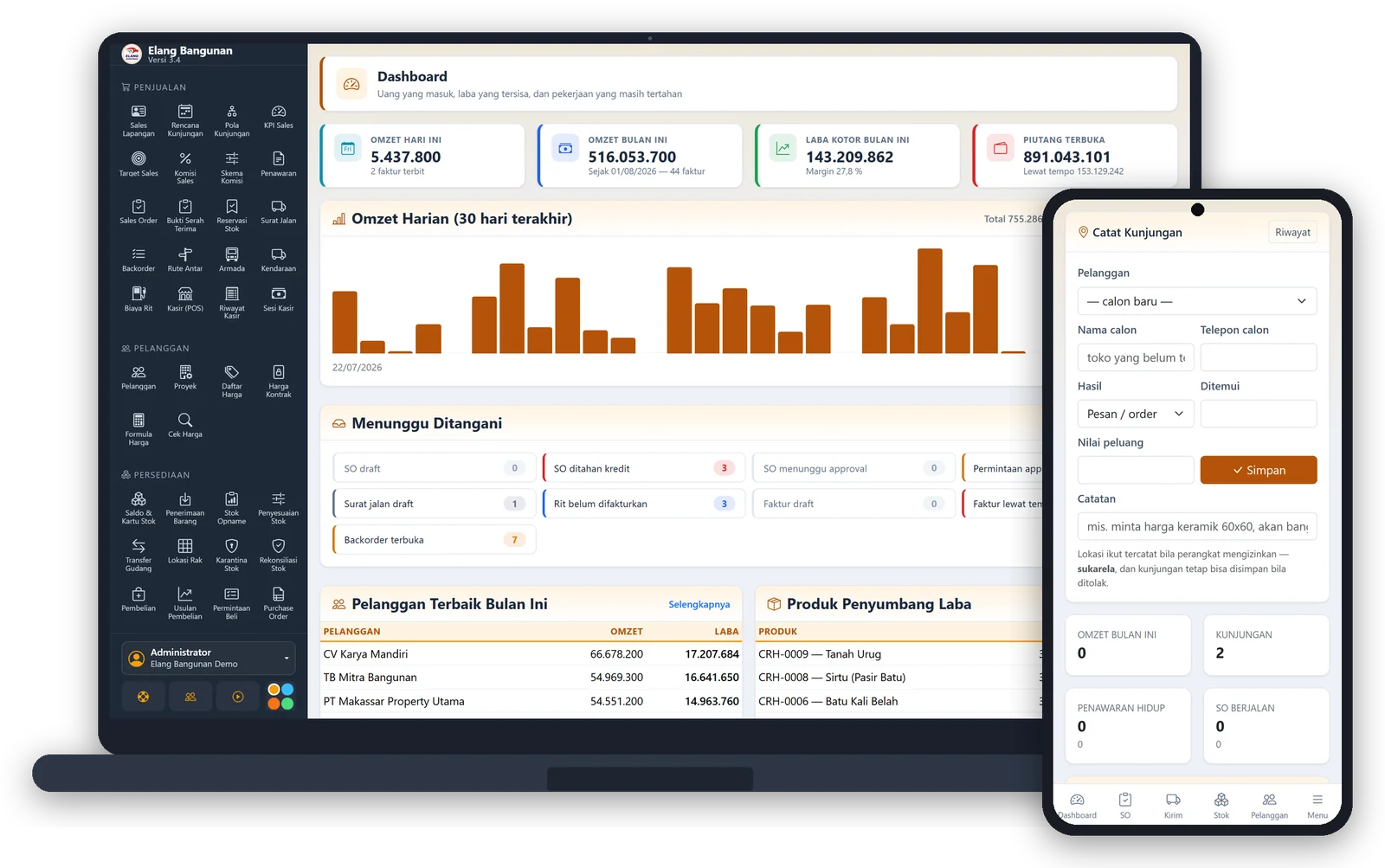
Problems that commonly occur in this trade
The six issues below are genuine complaints in the building material business, and each one already has a screen that addresses it.
A single order ships three times, and nobody knows what remains outstanding.
→Open backorders are calculated automatically from the sales order less every delivery note issued.
The invoice has been issued although the goods have not yet reached the customer.
→A per-customer policy can hold invoicing until the proof of delivery is returned.
Commission is calculated on invoices, while the payment may never be collected.
→Commission can be based on cash actually received and withheld until the invoice is settled.
A customer is overdue yet can still place orders, because nothing blocks them.
→Credit hold blocks the document effectively; release is tiered and value-capped.
Collected cash is held by the collector and is not deposited on the same day.
→A “cash in the collector’s hands” account keeps undeposited money out of the company cash balance.
Cement is counted in sacks, purchased by the pallet, and sold by the truckload.
→Nested units are fully supported, and the conversion factor is recorded on every transaction line.
A photograph of the goods, a signature, the time, and a GPS point are returned from the field first. Only then may the invoice be issued, under a policy set per customer.
Commission can be tied to successful collection rather than to issued invoices. Credit sales that are never followed up are no longer paid in full.
Truck capacity is evaluated by weight and volume at once, units nest from sack to pallet to truckload, and rack locations determine the picking sequence. All standard, not bolted on.
A field process chain that already exists, not a customisation promise
What other systems classify as “requires customisation” is a standard screen in Elang Bangunan.
Sales & delivery
- ✓Quotation → sales order → stock reservation → delivery note → backorder
- ✓One sales order may be delivered by several vehicles on several dates; invoices may combine multiple delivery notes
- ✓Delivery routes are generated automatically (nearest-neighbour and 2-opt) rather than sequenced by hand
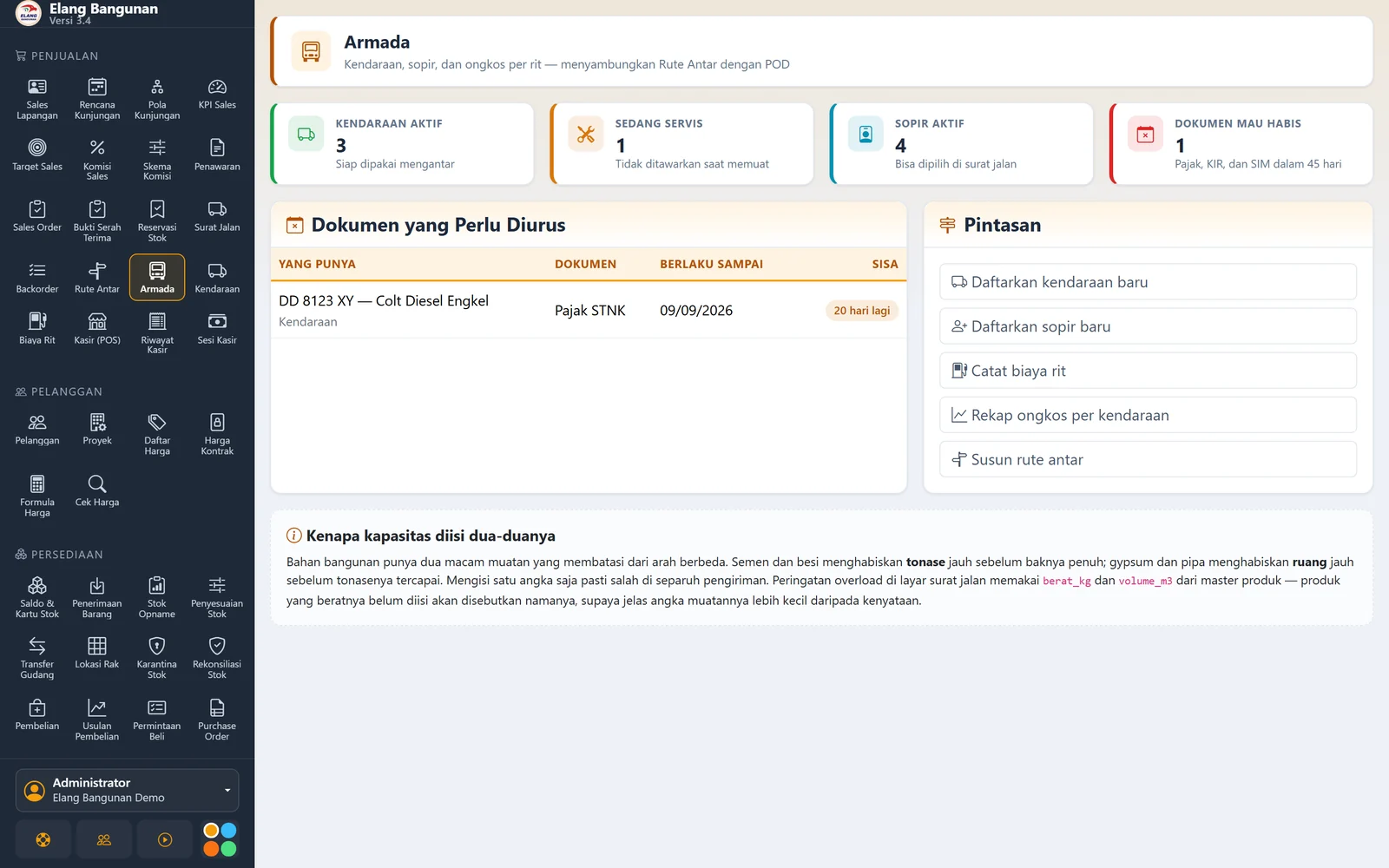
- ✓Fleet records carry both weight and volume capacity — cement reaches its tonnage limit before the bed is full, plasterboard the other way round
- ✓Overload warnings from both directions before the vehicle departs
Proof of delivery that gates invoicing
Key differentiator- ✓Recipient name, signature, a photograph of the goods, the time, and a GPS point are all returned from the field
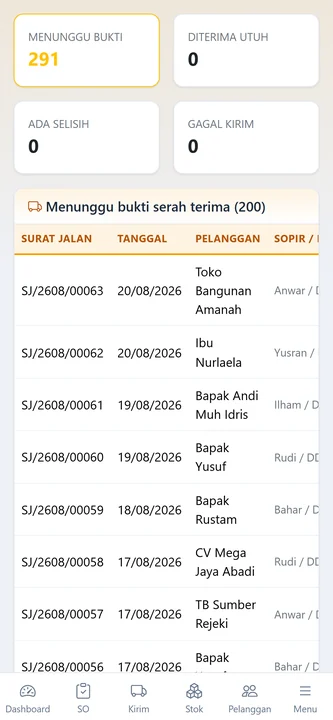
- ✓A per-customer policy: the invoice may only be issued once the proof of delivery has been received — not a warning that can be dismissed
- ✓Goods returned and goods lost in transit are treated differently in the accounting records
- ✓Delivery notes without proof remain in the work queue rather than becoming the driver’s sole responsibility
Field sales
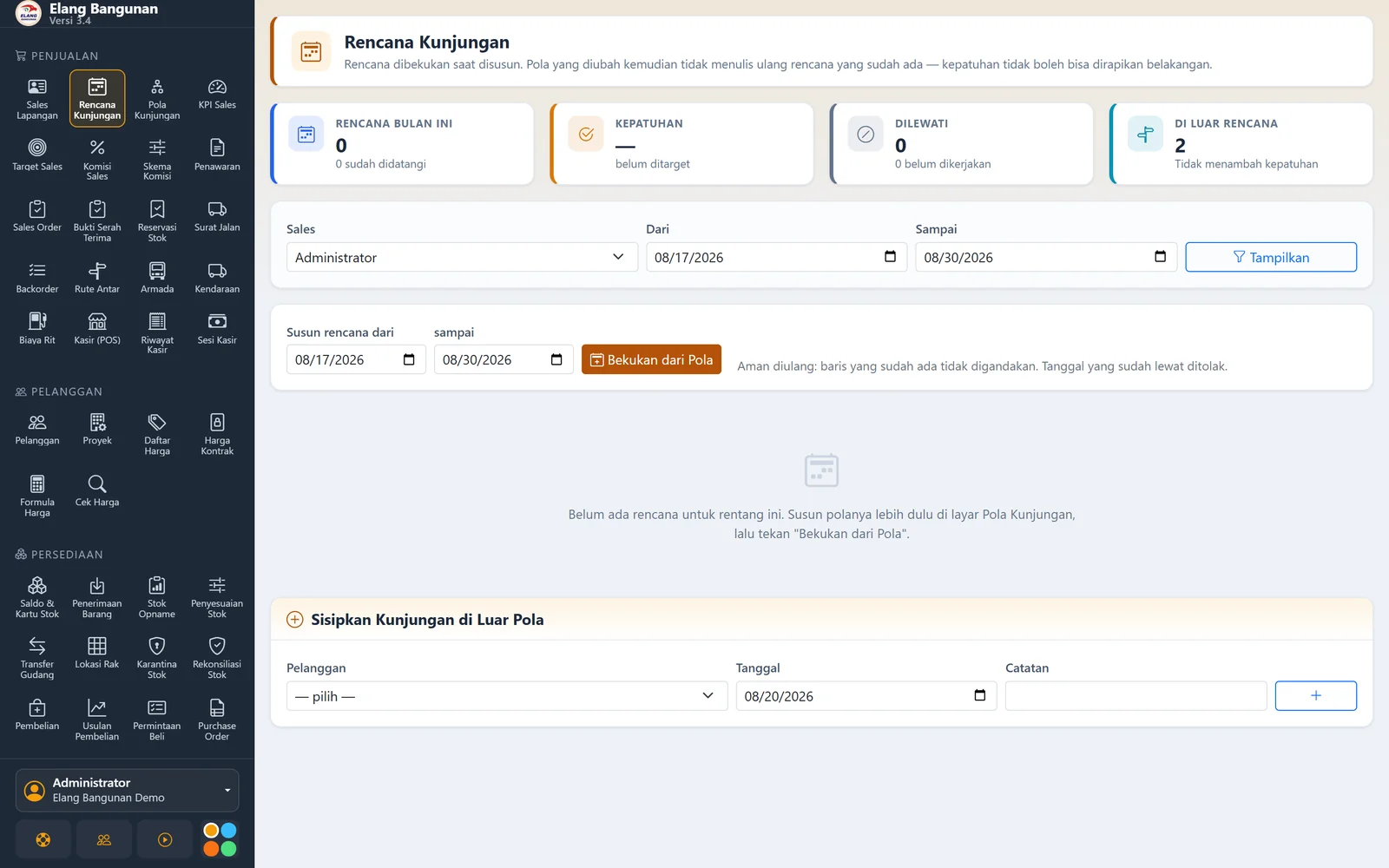
- ✓Journey plans: a per-customer pattern on a weekly, fortnightly, or four-weekly cycle, frozen into a daily plan
- ✓Visit compliance is measured objectively — visited, skipped with a stated reason, and off-plan visits that do not increase the compliance figure
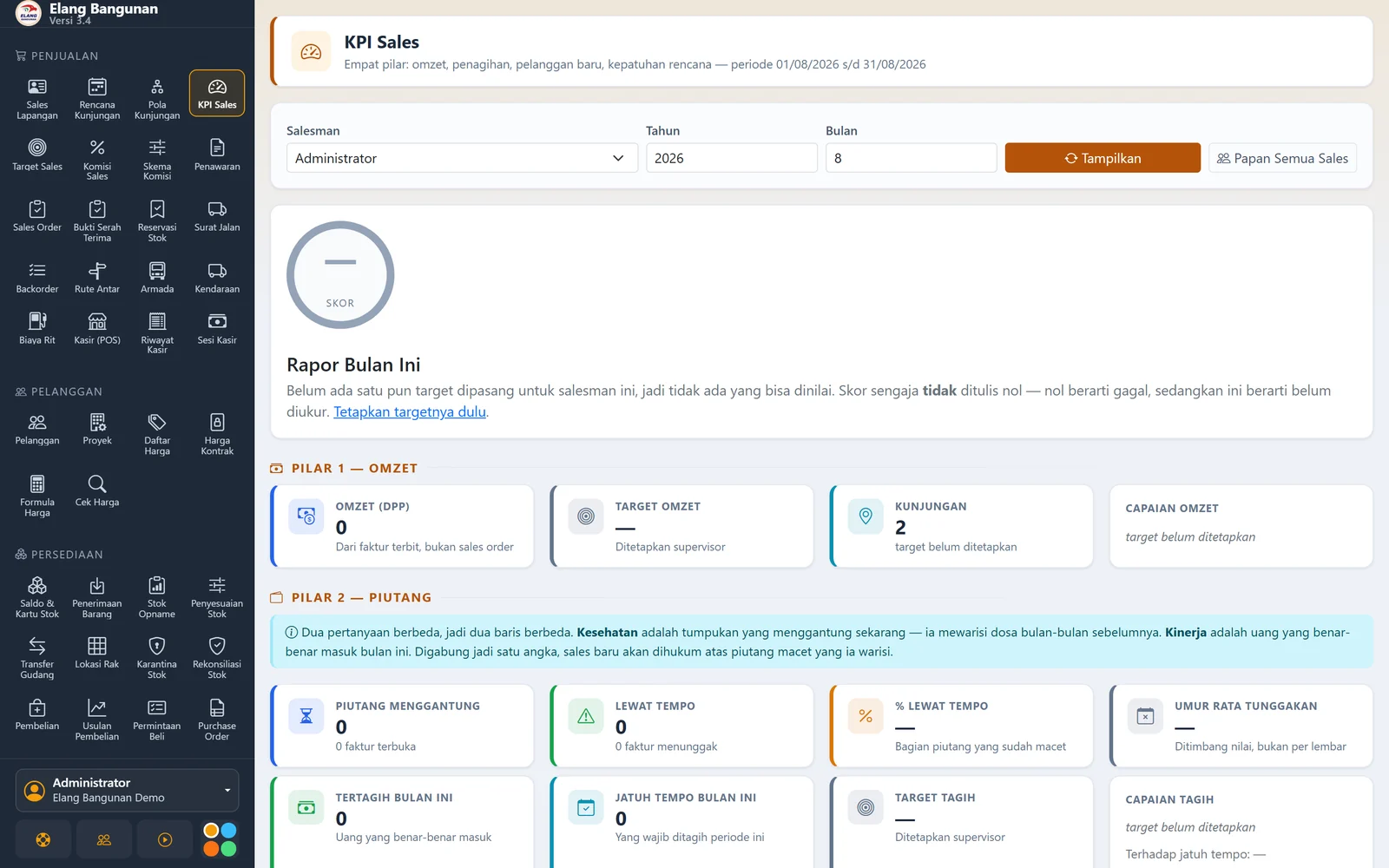
- ✓A weighted four-pillar KPI: revenue 50, collections 30, new customers 20, and compliance 20
- ✓A pillar with no target set is excluded from the calculation rather than scored as zero — zero means failure, untargeted means unmeasured
- ✓Commission is calculated on cash received (or alternatively on revenue or profit), progressively tiered, and may be withheld until the invoice is settled
Customers, pricing & credit
- ✓Segment pricing, quantity breaks, and contract prices per customer or per project
- ✓The pricing formula separates markup from margin strictly — a cost of 100,000 at 20% markup becomes 120,000, whereas at 20% margin it becomes 125,000
- ✓The Price Check screen explains how each price was formed, line by line
- ✓Credit limits take receivable ageing and credit notes into account, not merely the outstanding total
- ✓Credit hold with tiered, value-capped release; customer and supplier portals with separate accounts
Inventory & purchasing
- ✓Multiple warehouses, send–receive transfers, and stock quarantine
- ✓Nested units with the conversion factor recorded on every transaction line — amending the master conversion does not alter historical documents
- ✓Rack locations: pick lists are ordered along the route the warehouse operator actually walks
- ✓Journalled stock counts, together with reconciliation of balances against the general ledger
- ✓PR → PO → receipt → invoice with three-way match; purchase suggestions derived from sales velocity, accounting for purchase orders already in progress
Finance & accounting
- ✓A complete chart of accounts, balance sheet, profit and loss, general ledger, and period close
- ✓Receivable and payable ageing that always agrees with its own total — guarded by automated tests rather than manual checking
- ✓Fixed assets with deterministic depreciation schedules and gain or loss on disposal
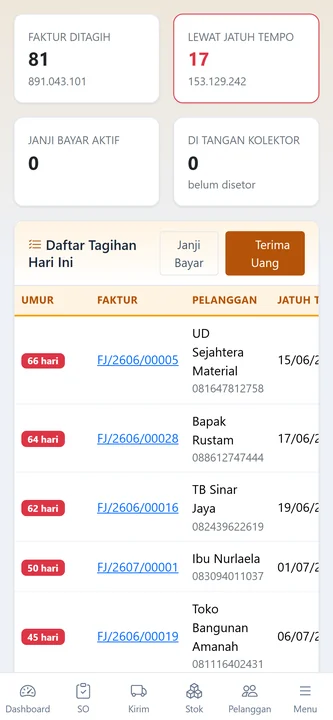
- ✓Field collections: worklists, promises to pay, receipts, collector deposits, and a cash-in-collector-hands account
- ✓Indonesian e-invoicing, multi-entity consolidation, and tiered value-capped approvals
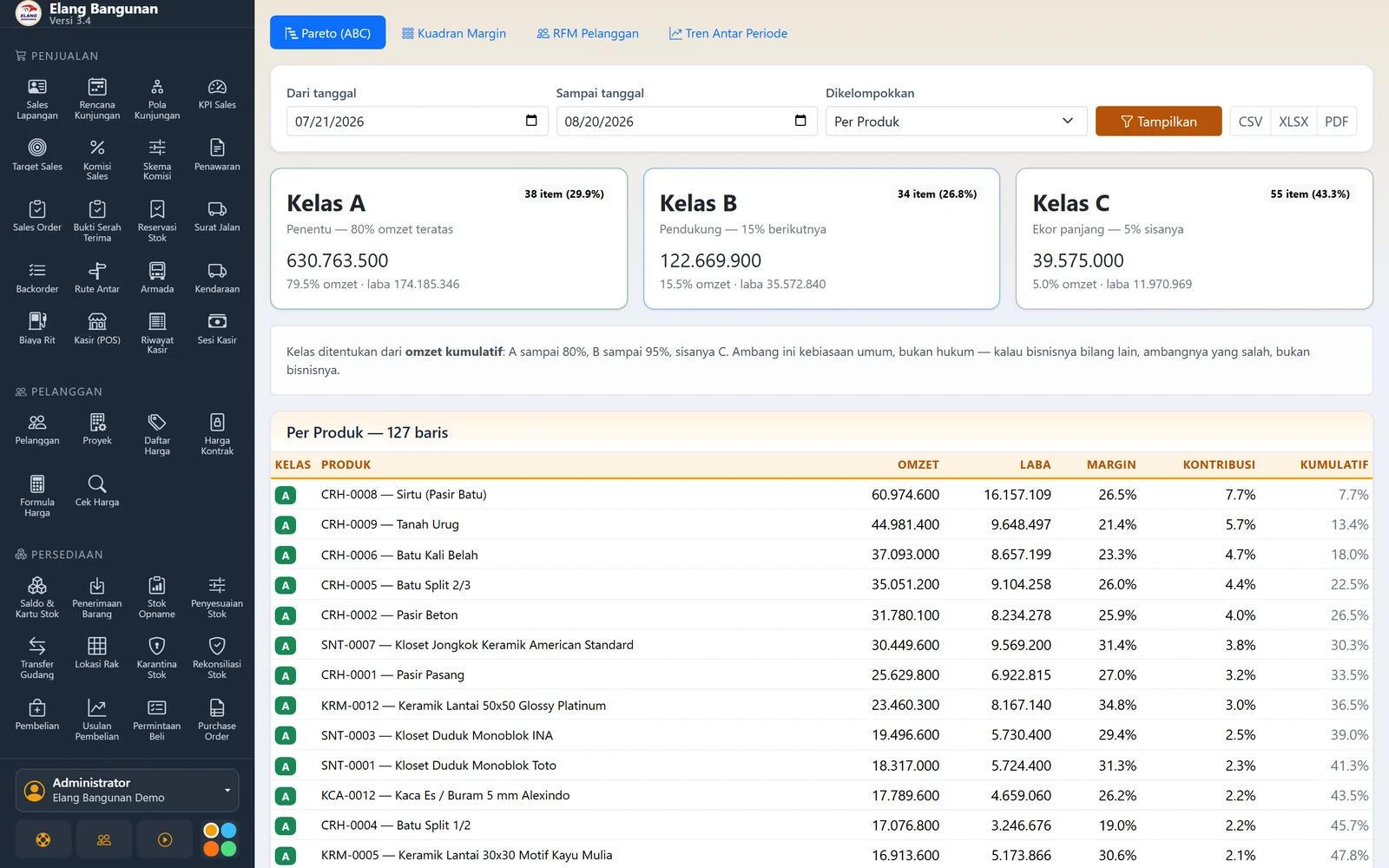
The actual Elang Bangunan interface
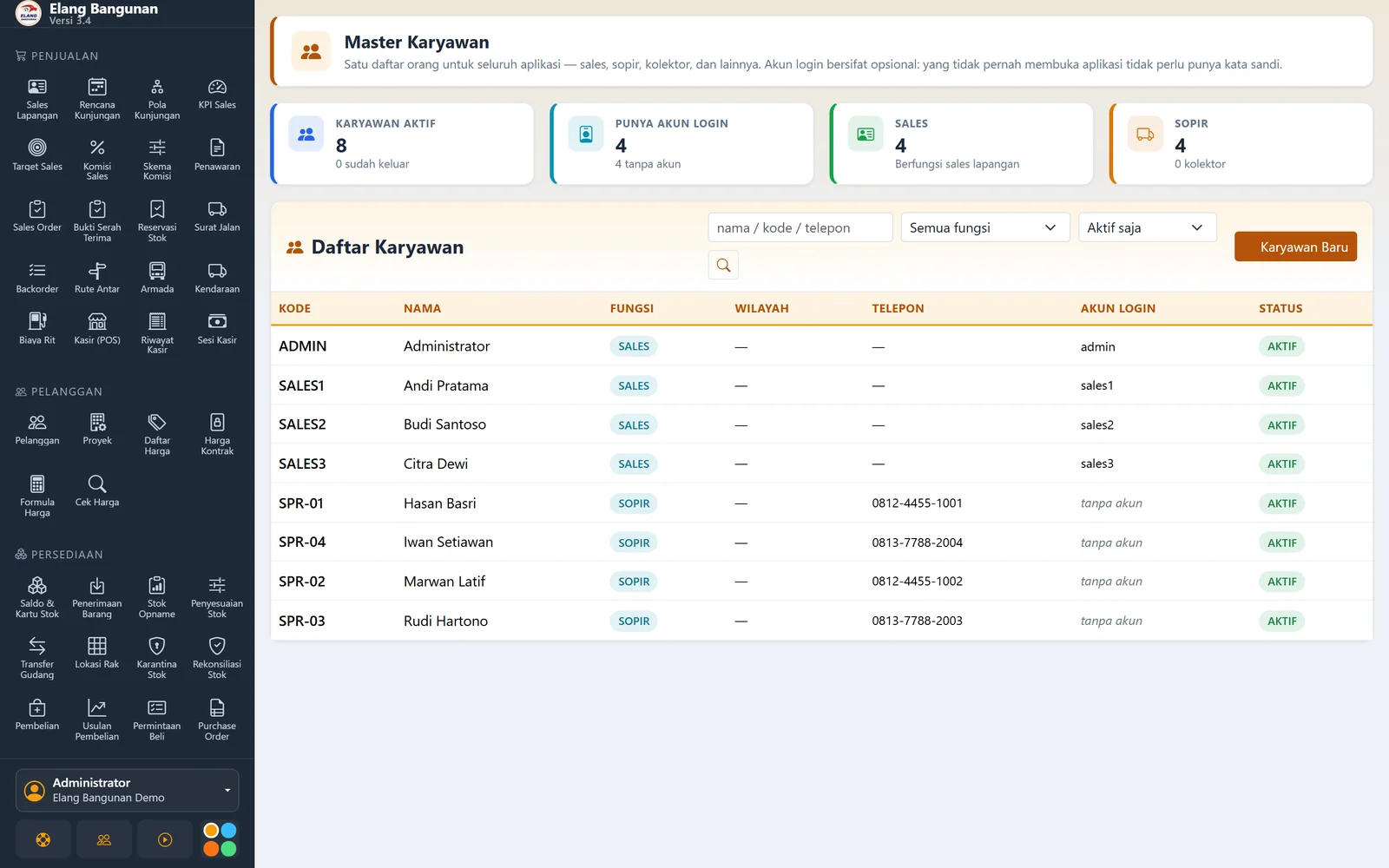
Screenshots taken directly from the running system — not mockups.
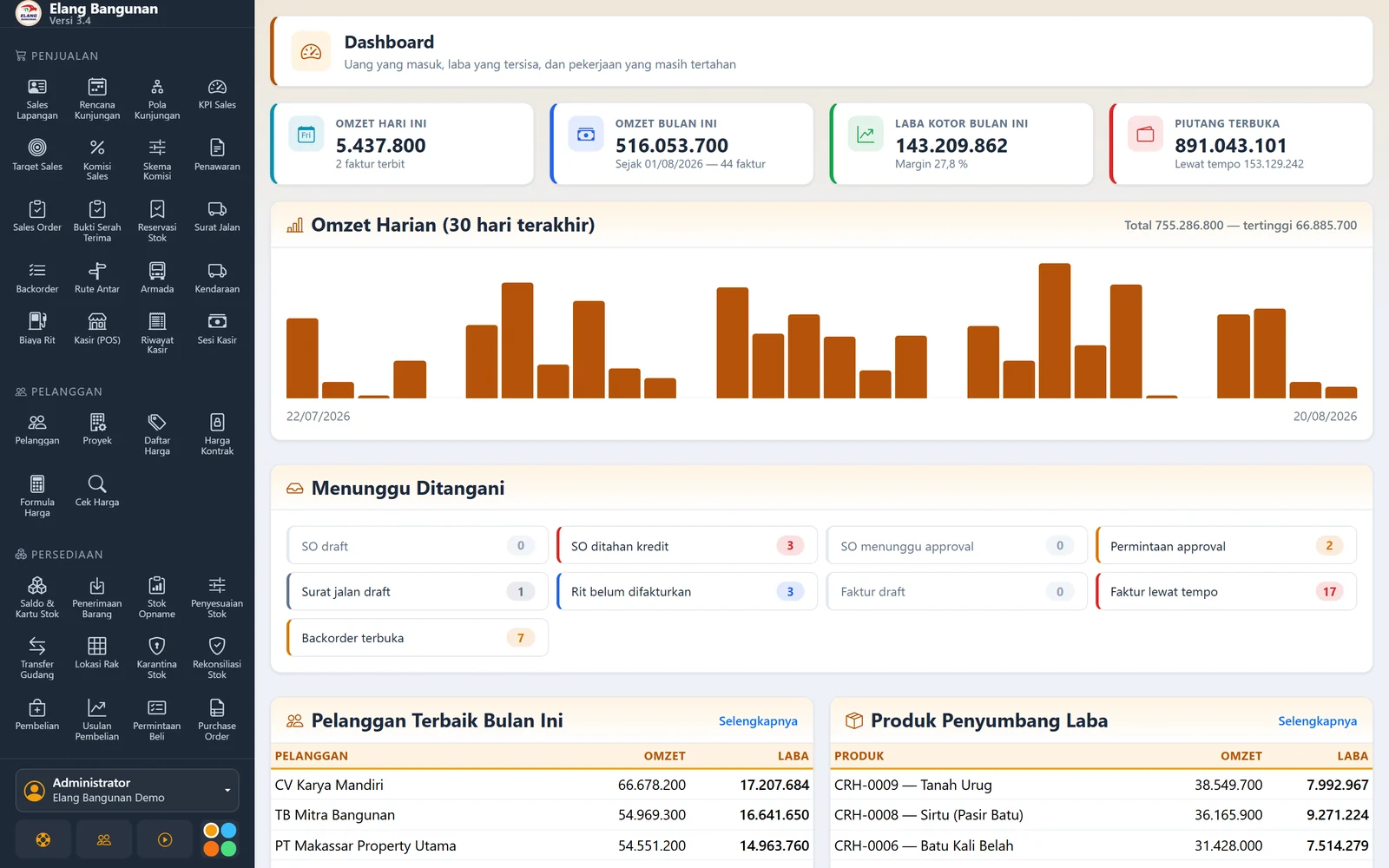
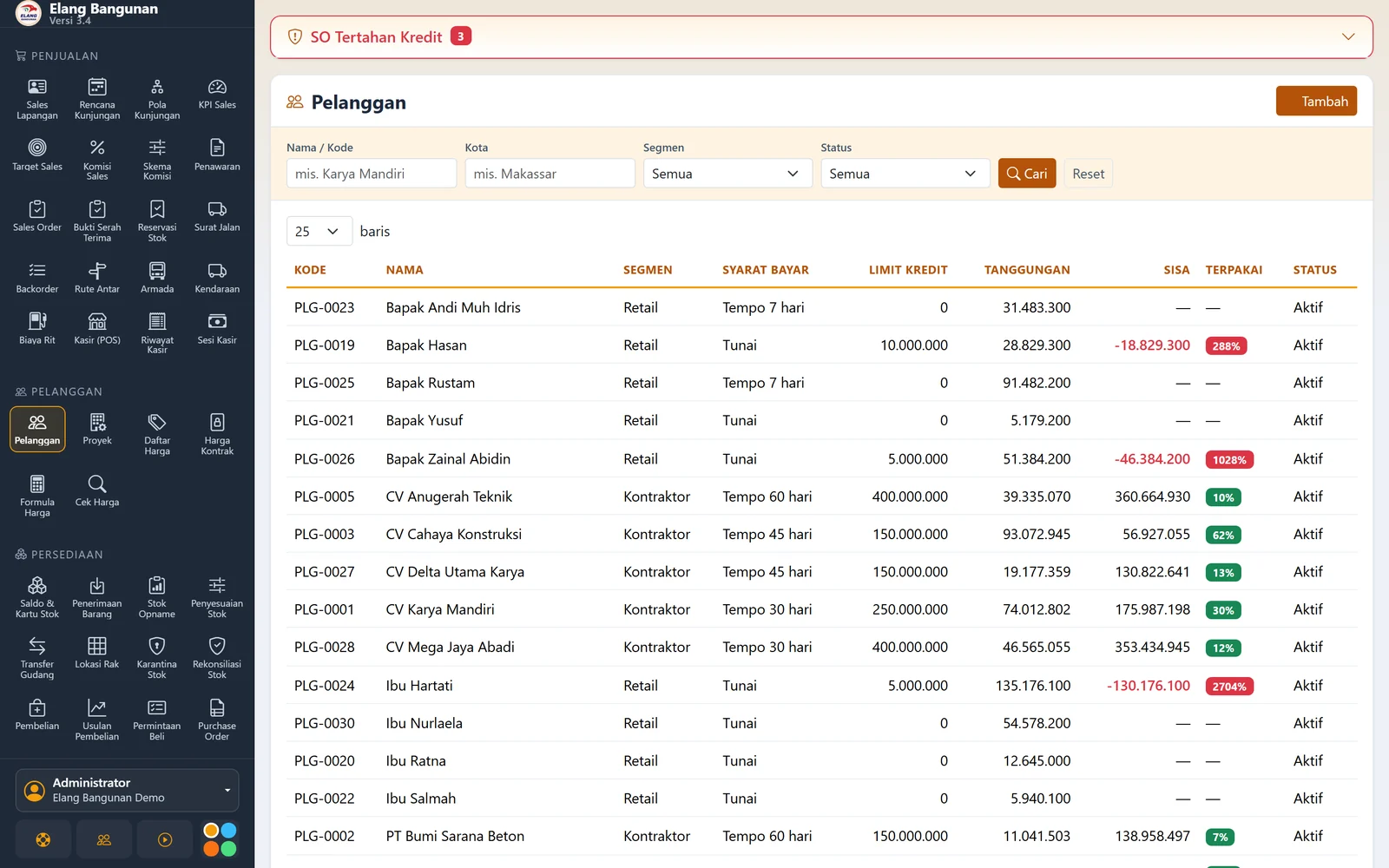
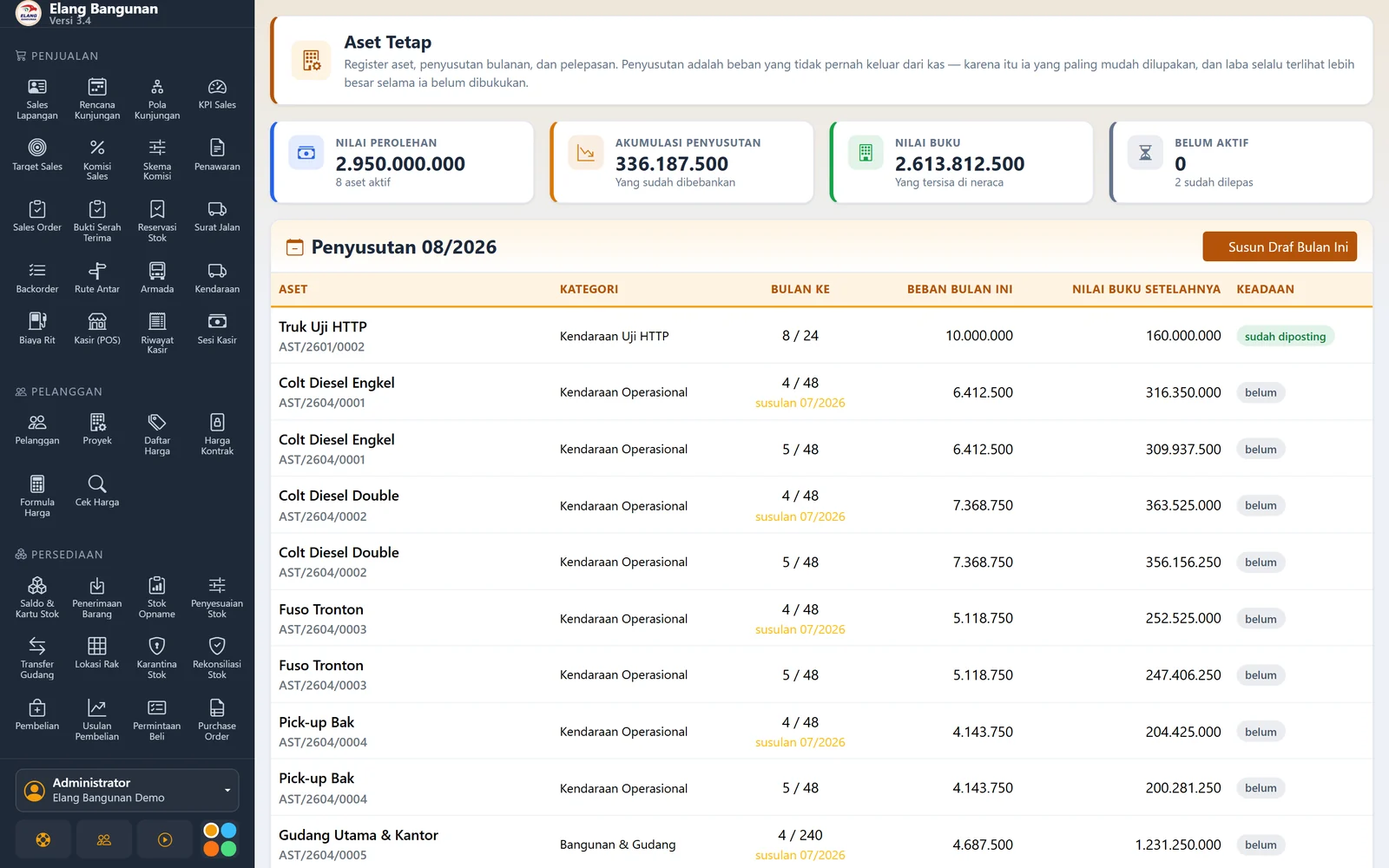
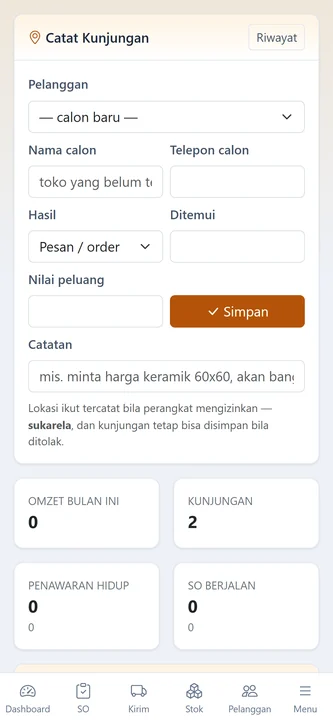
The sales, proof of delivery, and collection screens are designed for handheld devices
These three screens are used at customer premises and en route rather than at a desk. Their layout was therefore designed for mobile first and then adapted to larger displays.
The verification tools live inside the product, not on a consultant’s laptop
In other products this kind of checking usually exists as a script owned by a consultant — and that script leaves with the laptop.
13 data health checks
Journal balance, general ledger inventory against the ledger, ageing against receivable balances, orphan accounts, negative stock, and accumulated depreciation against its own history — all runnable from inside the application at any time.
Stock reconciliation
Recalculates the entire inventory ledger from the beginning and compares it with the recorded balance. Differences are presented per item rather than as a single aggregate figure.
A per-document audit log
Records who changed what and when, together with the values before and after. Questions about a price change have a documented answer.
Posted documents cannot be edited
Corrections are made through reversals, returns, or credit notes, so a prior period report does not change after it has been issued.
Four tiers, with modules activated progressively
Begin with what you need today and move up as field activity grows — without changing systems and without data migration.
- 1
STORE
Modules activated
Master data, customers, stock, POS, reports, and users.
- 2
ESSENTIAL
Modules activated
+ quotations, sales orders, delivery, receivables, cash, purchasing, payables, and accounting.
- 3
PRO
Modules activated
+ pricing, credit, reservations, approvals, POD, tools, fleet, rack locations, and fixed assets.
- 4
ENTERPRISE
Modules activated
+ field sales & journey plans, commission, field collections, notifications, API, tax, planning, portals, consolidation, routing, and BI.
The monthly fee is fixed (server rental and maintenance), not a per-user or per-transaction charge that rises as your business grows. Contact us for a quotation matched to your scale.
How well Elang Bangunan suits your business
| Business profile | Assessment |
|---|---|
| You have field sales staff, sales on terms, your own fleet, and collectors | Highly suitable |
| You need photographic proof of delivery that gates invoicing | Highly suitable |
| Multiple branches and multiple legal entities within one group | Suitable |
| A small shop that only needs a cashier and simple bookkeeping Elang ERP POS suits you better → | More than required |
| A large aisled warehouse with staged pick and pack | Not yet suitable |
Frequently asked questions
How does this differ from Elang ERP POS?+
The two address different needs. Elang ERP POS is built for retail shops: a fast cashier, multi-branch stock, and automatic bookkeeping. Elang Bangunan is built for building material distributors and stores, whose hardest problem lies after the counter transaction — goods delivered in stages, invoices issued once delivery is proven, and payment then followed up in the field. A POS module is included, but it is only one channel within this system. If your business process ends at the counter, Elang ERP POS is more suitable and more economical.
May I try it before we discuss pricing?+
Yes, and we recommend it. Please contact us to arrange a guided demo. We walk through the system with you on three months of sample data that has passed through the entire document chain, so delivery notes, invoices, journals, and depreciation are seen connected exactly as they would be in real use — and the session can focus on whichever process troubles your business most.
How does proof of delivery gate invoicing?+
Each customer can be given a policy under which their invoice may only be issued once the proof of delivery has been returned. What comes back from the field is the recipient name, a signature, a photograph of the goods, the time, and a GPS point. Until that evidence exists, the delivery note remains in the work queue and the invoice is held — not a warning that can be dismissed. Goods carried back and goods lost in transit are handled differently, because their accounting consequences differ.
What is sales commission calculated on?+
You may choose the basis: revenue, profit, or cash received. For sales on terms we recommend cash received, because commission on issued invoices pays in full a representative who sells on credit without pursuing collection. The scheme is progressively tiered, and commission may be withheld until the invoice is settled. All of this is configuration, not a customisation request.
How are sacks, pallets, lengths, and metres handled?+
Units are nested: one product may carry several units with tiered conversion factors, and the purchase unit may differ from the selling unit. That conversion factor is recorded on every transaction line. Consequently, if a master conversion is corrected later, documents from earlier periods do not shift with it and historical reports remain consistent.
Is there an Android or iOS application?+
Not yet. What exists today is a responsive web interface; the sales, proof of delivery, and collection screens were designed for handheld devices first because they are used at customer premises. The server side has been prepared for a native application (delta synchronisation and batch uploads that are safe to repeat), but the Android/iOS application itself has not been built. If a native offline application is an absolute requirement, it is worth waiting until it is available.
How do hosting and cost work?+
We purchase, provision, and maintain the VPS on your behalf — the server, security, updates, and backups are our responsibility. The monthly fee is fixed (server rental and maintenance), not a per-user or per-transaction charge that rises as your company grows. The data is entirely yours and can be exported at any time; the source code is not handed over. The figure depends on the tier and your scale, so please contact us.
How long until the system can be used?+
That depends on how well prepared your initial data is. What has to be migrated is the product catalogue with its units and conversions, the customer list with payment terms and credit limits, opening stock balances, and aged receivables. The tier is then raised in stages: sales and stock first, then proof of delivery, and finally journey plans and commission once the field team has settled in. Switching every module on in the first week is what makes field adoption difficult.
See Elang Bangunan with your own company data
Contact us for a guided demo with our team. If it suits your needs, we will show you how your product catalogue, customer records, and opening balances are migrated into the system.